

Disclosure: The views expressed are my own and reflect my first-hand experience using L-Acoustics Source Intelligence during this concert. I received no payment to write or publish this article.
Not feeling the reading vibe? Hit play and listen to this blog instead.
The Brief
There is much to appreciate about an intimate concert. The audience is close to the artiste, the arrangements have room to breathe, and the stories between songs become part of the experience. For the engineer, however, that same intimacy brings its own challenges. Put a drum kit a short distance from the vocal microphone, and you will soon find yourself mixing more than just the voice through that channel.
I had the opportunity to use L-Acoustics Source Intelligence at Nathania Ong’s concert, Honest. Having only read and heard about it before this, I was curious to find out how it would fare in a setting where stage bleed was a concern. Here is my experience of using it for the show, along with my personal opinion.
The Concert
Nathania Ong is a singer and actress, and the first Singaporean to have played Éponine in Les Misérables and Eliza in Hamilton in the West End. If you haven’t heard of this immensely talented artiste yet, I would strongly suggest checking out some of her work on streaming platforms.
Honest was a window into Nathania’s youth, relationships, first dates, heartbreaks, successes, and journey of finding herself through the tumult of growing up and simply being human.
The setlist included songs like “Don’t Rain on My Parade,” “Burn,” “God Help the Outcast,” and “Somewhere Over the Rainbow,” alongside her originals “Perfect” and “Honest,” the titular song.
While many of these songs would thrive with grand arrangements, Nathania chose stripped-down instrumentation to suit the intimacy of the concert. The band consisted of a five-piece drum kit, keyboards, electric guitar, and bass. With her voice carrying both the songs and the stories behind them, keeping the vocal clear was central to the audience’s experience.
The Challenge
Small venues can be deceptively challenging. KC Arts Centre is a 380-seat theatre with a stage measuring 5.5m in depth, so the proximity of the drum kit to the vocal microphone was a concern.
Nathania is a belter, singing with immense clarity and gusto, but a strong voice does not stop a microphone from picking up the snare, hi-hats, and cymbals nearby. That is just physics at play.
For those unfamiliar with the term, stage bleed is sound from one source being captured by a microphone intended for another. In this case, the vocal microphone was also picking up the drums. Raising the vocal channel would therefore bring up some of the kit along with her voice, making it harder to control the balance.
There is a distinction to make here. The audience also hears the acoustic sound of the drums directly from the stage. Processing the vocal channel can reduce the drum sound captured by that microphone, but it cannot reduce the acoustic level of the kit in the room. The musicians still have to play to the space, and the mix has to account for what the audience is already hearing.
What Is Source Intelligence?
Source Intelligence is L-Acoustics’ real-time voice-separation processing. It uses a machine-learning algorithm to identify the voice within an incoming signal and reduce unwanted sound around it.
For this concert, my interest was straightforward: could it help reduce the drum bleed in Nathania’s vocal microphone while keeping her voice sounding natural?
The venue was already fitted with an L-Acoustics system, and J5 Productions, the Singapore-based AV production company supporting Honest, provided the L-ISA processor and the hardware and software needed to use Source Intelligence. I was fortunate to have the opportunity to try it in the context of an actual performance.
The Rig
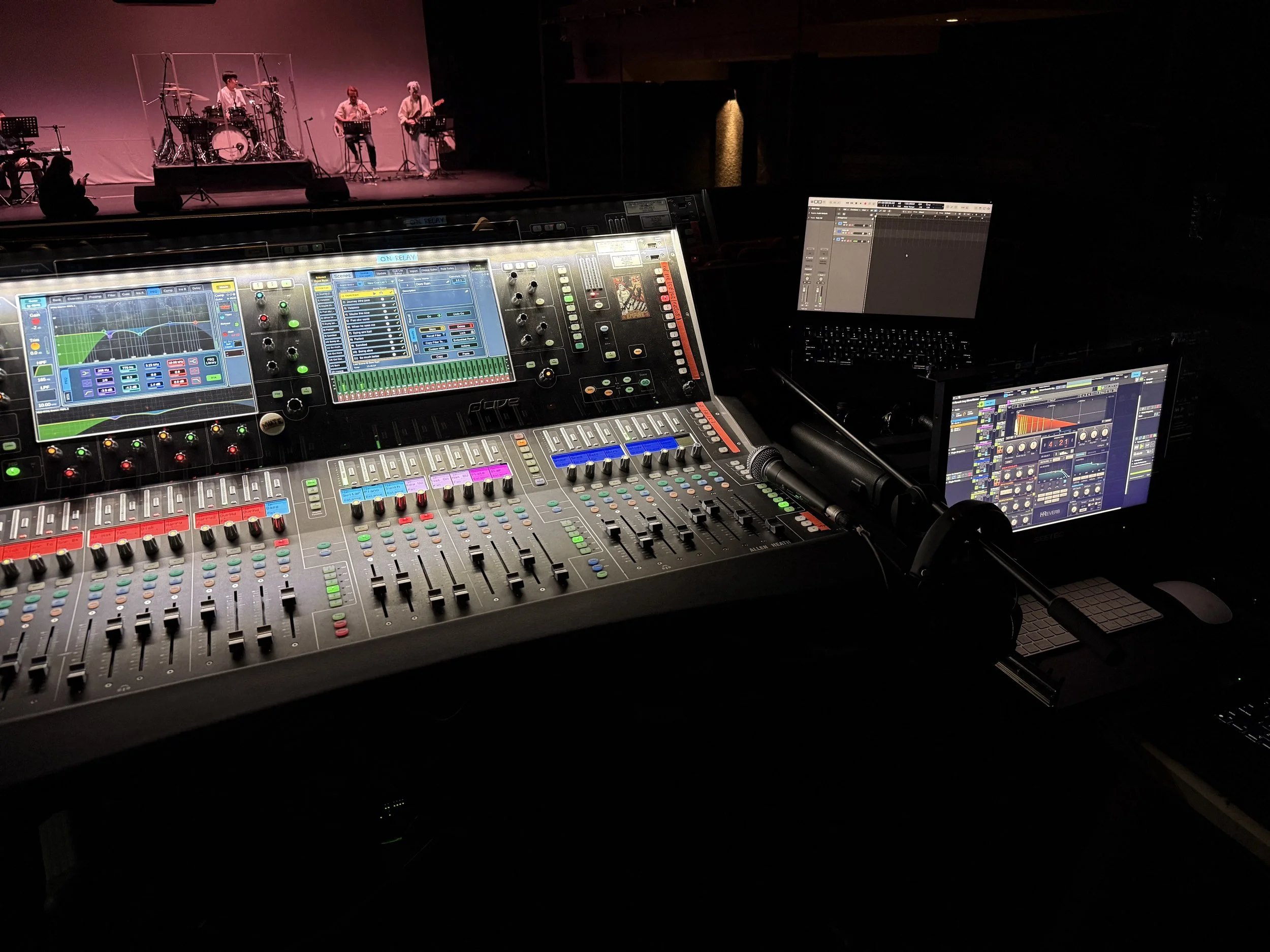
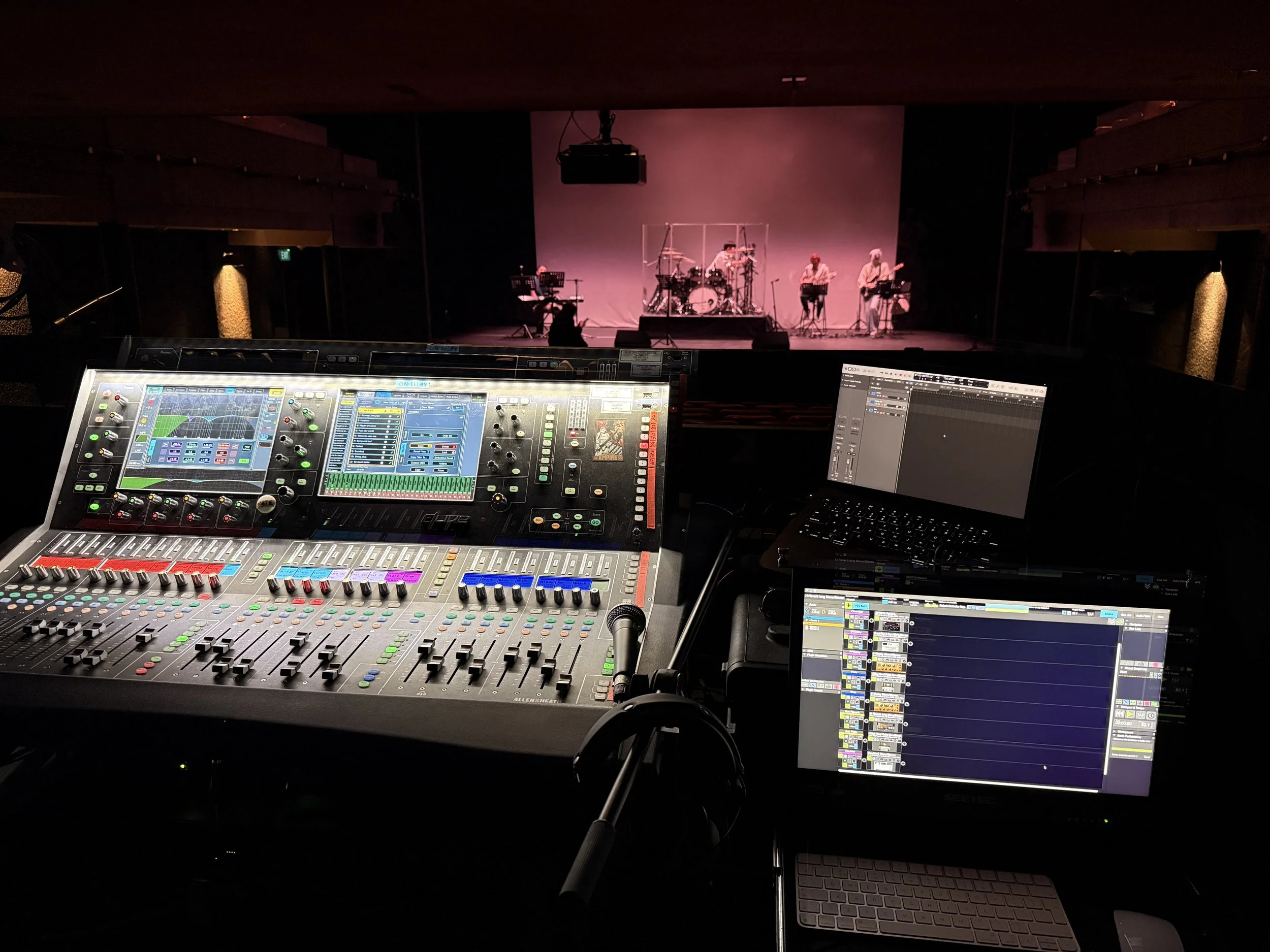
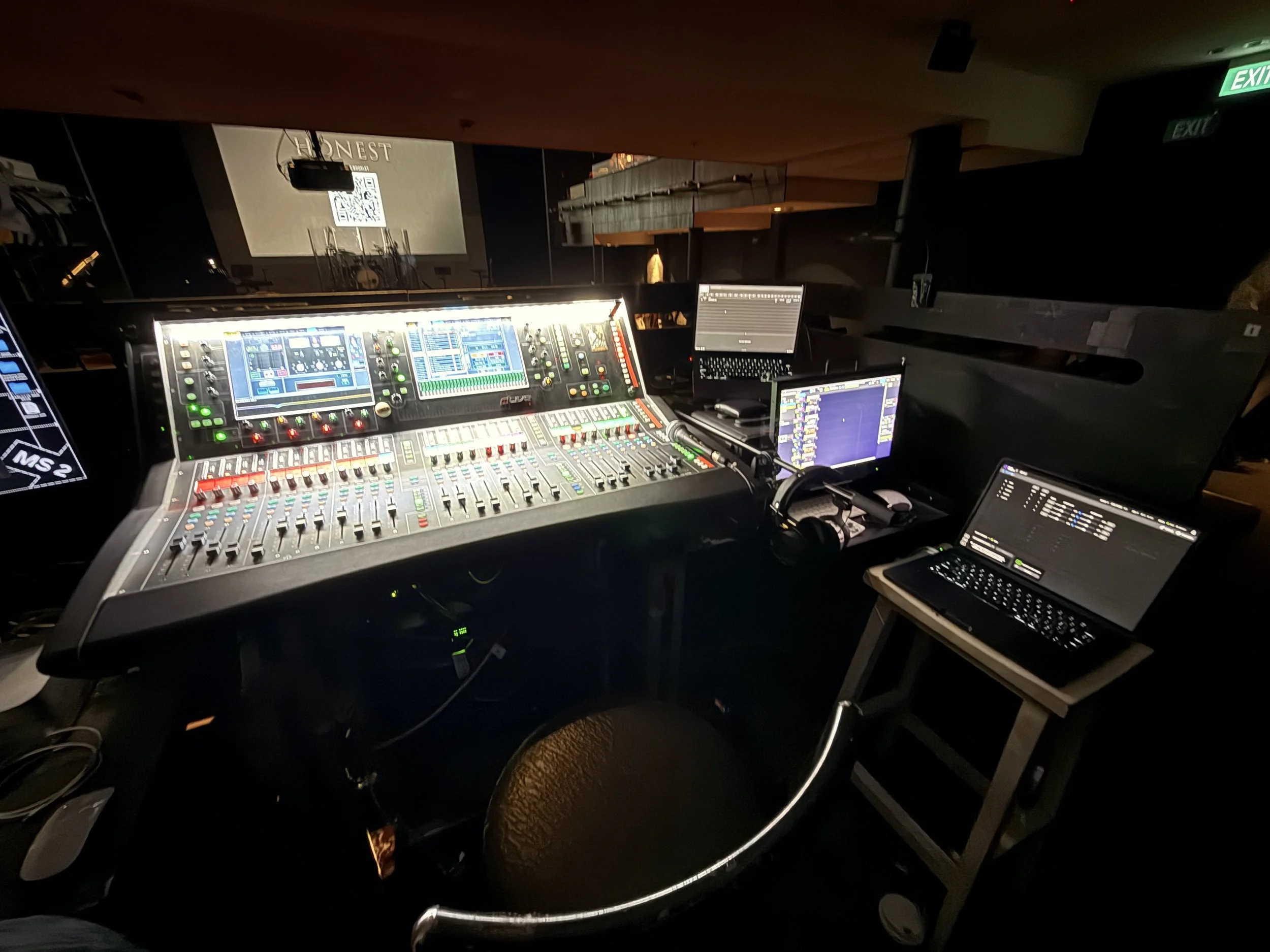
The in-house console was an Allen & Heath dLive S5000 fitted with a Dante option card. This gave us the flexibility to send audio out of the console for processing and bring it back over the Dante network.
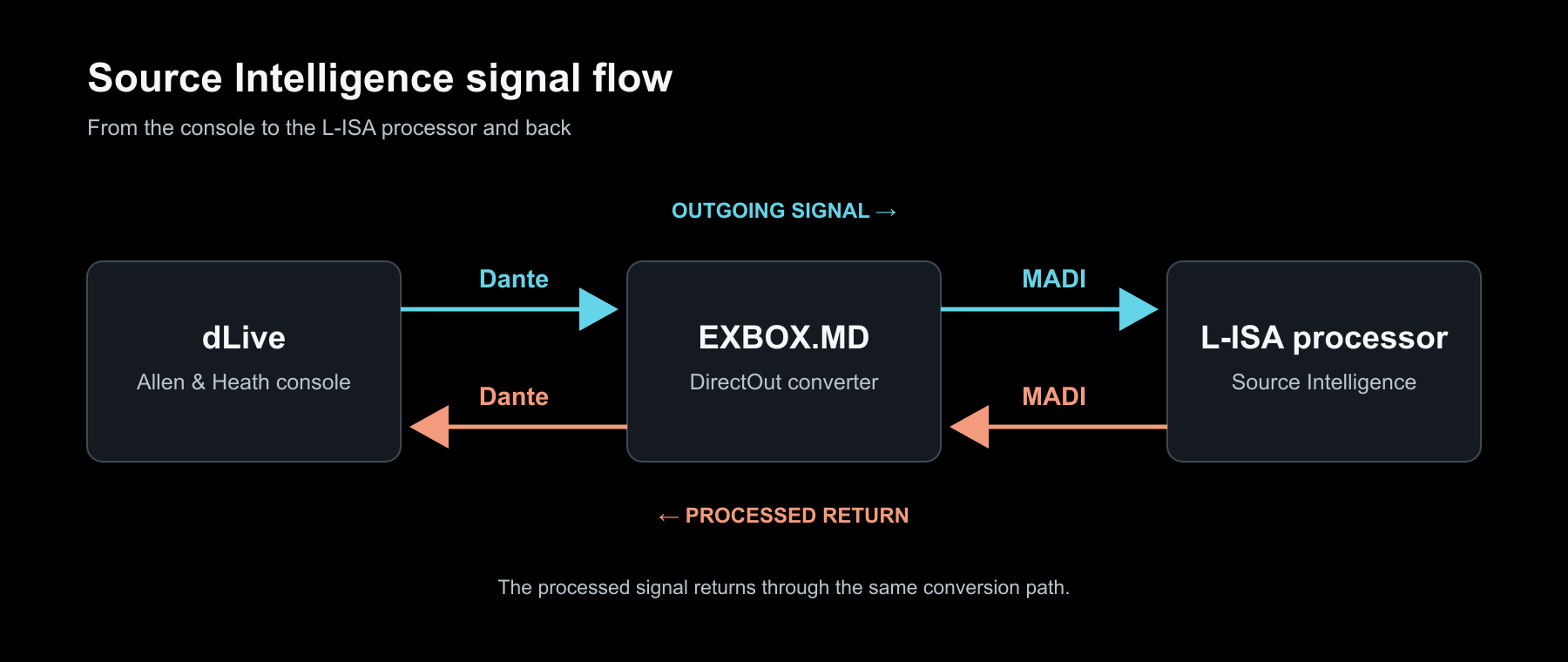
To connect the console to the L-ISA processor, we used a DirectOut EXBOX.MD to convert between Dante and MADI. The outgoing signal travelled from the console over Dante, through the EXBOX.MD, and into the processor over MADI. The processed signal returned through the same conversion path to the console.
In simplified form:
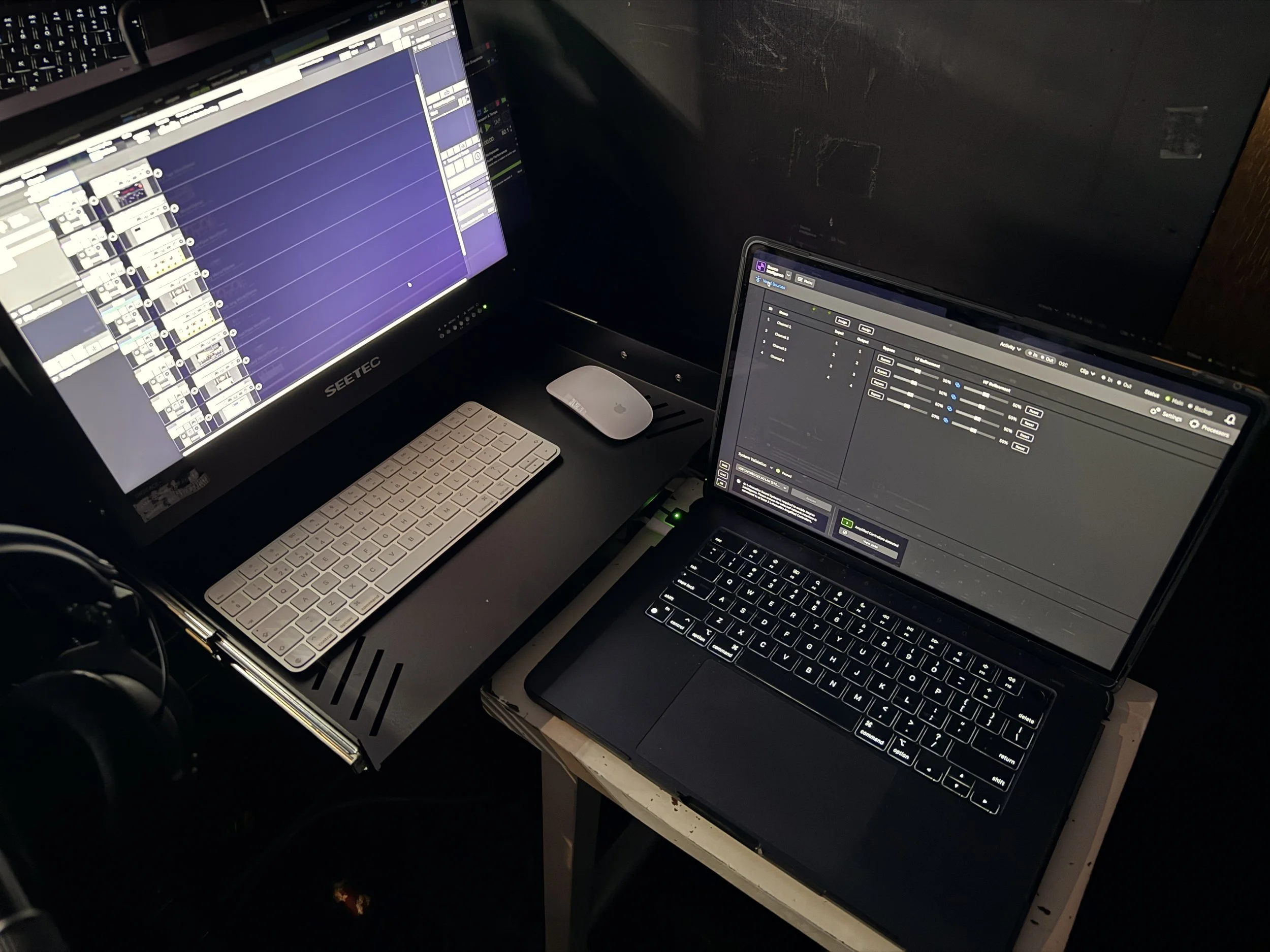
Once the routing was established, the processing controls were refreshingly simple. There were separate controls for low-frequency and high-frequency refinement, allowing me to adjust the treatment while listening to its effect on the vocal.
So much of the beauty of this system lies under the hood, removing complexity for the user. From an operator’s perspective, I appreciated being able to spend my time listening rather than working through layers of settings.
I was mixing both monitors and front of house (FOH) from the dLive. To avoid the additional latency from Source Intelligence and the Dante-to-MADI conversion in Nathania’s and the musicians’ monitor mixes, I used a parallel, unprocessed vocal channel for monitors and kept the processed signal for FOH only.
What You Are Hearing
The excerpt below was recorded during the fourth and final show, with audio sent from the dLive to the recording system over Dante. The musicians’ instruments and Nathania’s vocals were captured as separate stems.
In this excerpt, I mute and unmute the instrument channels. When they are muted, Nathania’s vocal channel is left audible, allowing you to hear some of the stage sound still being captured by her microphone.
The band continues playing throughout. Muting the instrument channels removes their contribution through those channels; it does not stop the band’s sound from reaching the vocal microphone.
This is not a Source Intelligence on/off comparison. The changes you hear result from the instrument channels being muted and unmuted, rather than Source Intelligence being bypassed. The excerpt demonstrates how the vocal channel sits within the arrangement and what remains audible when the instrument channels are muted. It does not demonstrate the difference between the processed and unprocessed vocal signal.
Listen for the residual drum sound when the instrument channels are muted. Headphones are recommended.
The Result
Source Intelligence gave me a far cleaner vocal channel with substantially reduced bleed from the drum kit.
I opted to retain some drum bleed to keep a sense of space alive in the mix. Having that control was useful, as I could work towards a balance that suited the performance rather than accept everything the microphone picked up.
My Thoughts
Take nothing away from the challenge of mixing in a small space. It is still an arduous task to reduce stage bleed in a space as intimate as this. A processor cannot ask a drummer to play more softly, move the kit further from the singer, or change how much acoustic sound reaches the audience. Healthy communication with the musicians and mixing to suit the space remain part of the job.
What Source Intelligence offered me at Honest was more control over the unwanted sound in the vocal channel. In my experience, that made it easier to keep Nathania’s voice clear while retaining some of the space and character of the stage.
After my first experience with the system, I came away impressed by both the result and the simplicity of the controls. I would be interested in exploring it further in other settings, but this show gave me a useful introduction to what it could contribute.
At a concert as personal as Honest, the voice carries more than melody. It carries the pauses, the humour, the vulnerability, and the meaning behind the words. Keeping those details audible was the objective throughout.
And as I heard an audience member quip, “Goosebumps.”